


Offgrid Energy Labs and Keele University have signed a memorandum of understanding to deploy a pilot zinc-based long duration energy storage battery on Keele's campus, a project the companies describe as the UK's first zinc-LDES installation using a battery manufactured entirely in the country, giving a domestically made long-duration chemistry its first real-world operating data on UK soil. The pilot will run in a fully islanded configuration, assessing the technology's ability to capture and store around 1MWh of surplus renewable energy per month while testing safety, depth of discharge and round-trip performance under real operating conditions.
Offgrid Energy Labs is a UK battery technology company set up in 2018, manufacturing its ZincGel zinc-bromine battery at a factory in Hook, Hampshire, that opened in July, with more than 70 IP assets across the UK, EU, India and the US and ambitions to scale to gigawatt-hour production.
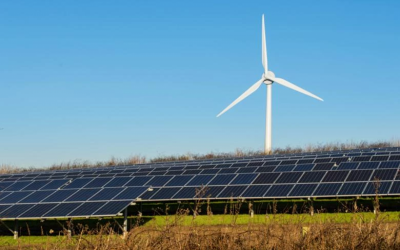
Keele University is a Staffordshire-based UK university whose Low Carbon Energy Generation Park already includes two wind turbines supplying up to 50% of the campus's electricity.
No direct quotes were provided in the source material. The partners say findings from the pilot will provide the technical evidence needed to develop a proposal for a larger, multi-megawatt-hour ZincGel deployment.
ZincGel's six-to-16-hour discharge window targets a gap lithium-ion struggles to fill economically: zinc-bromine chemistry is non-flammable, built from earth-abundant materials and can last up to 20 years against roughly 10 to 15 years for lithium-ion, trading energy density for safety and longevity better suited to stationary, long-duration use.
Testing on a live university microgrid, rather than in a lab, gives Offgrid independently observable performance data under real seasonal and demand variation, evidence that matters more to future commercial buyers than manufacturer specifications alone.
For the sector, a UK-manufactured alternative chemistry reaching a live pilot signals growing diversification beyond lithium-ion and iron-air as long duration storage moves from single-technology bets toward genuine chemistry competition.
Source: Renewables Now / Popular Science






.png)

