
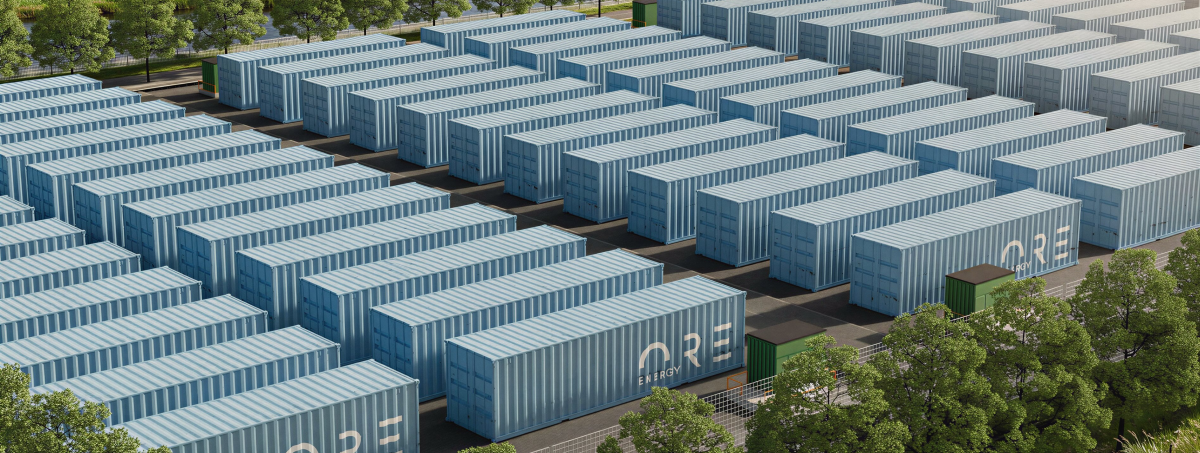
Ore Energy, an Amsterdam and Delft-based developer of iron-air batteries, has raised $43 million in Series A funding led by Plural and HV, capital the company says will help solve one of the energy transition's biggest bottlenecks: affordable storage that can hold renewable power for multiple days rather than hours. The round brings Ore's total funding to more than $61 million and included participation from Positron Ventures.
Ore Energy is an Amsterdam and Delft-headquartered developer of grid-scale iron-air batteries storing electricity for up to 100 hours, founded by chief executive Aytac Yilmaz, chief operating officer Rutil Özdemir and chief science officer Yaiza Gonzalez Garcia.
Plural is a Tallinn and London-based early-stage investment fund backing European founders, launched in 2022.
HV is a German early-stage and growth investor managing €2.8 billion in assets across nine fund generations.
Yilmaz said: "Affordable, renewable baseload power is the foundation for the next generation of manufacturing, AI infrastructure and industrial growth."
Ore's pitch rests on a cost claim rather than a novel chemistry: iron-air storage using only iron, water and air, at what the company says is a tenth of lithium-ion's cost per unit of long-duration capacity, without relying on lithium or cobalt supply chains. That positioning matters given how much curtailed renewable power Europe is already absorbing as a cost.
Grid-congestion modelling from the European Commission's Joint Research Centre estimates that renewable curtailment could reach 100 to 310 TWh annually by 2040 under current grid expansion trends, underscoring that the storage gap Ore is targeting is a recognised structural problem rather than a niche one.
The funding is explicitly tied to manufacturing rather than further R&D, with Ore targeting its first facility ahead of gigawatt-hour-scale production by 2028. That timeline places it in direct competition with lithium-ion and other long-duration storage technologies racing to serve the same demand driver: data centre and AI-related electricity growth, which global forecasts put at roughly double current levels by 2030.
Existing commercial traction, including a signed deal with Dutch supplier Budget Thuis and pilots with French utility EDF, gives the funding round more substance than a pre-revenue technology bet, though scaling from pilot to gigawatt-hour manufacturing remains the harder test ahead.
Source: Ore Energy (ACCESS Newswire) / European Commission Joint Research Centre




.png)

