

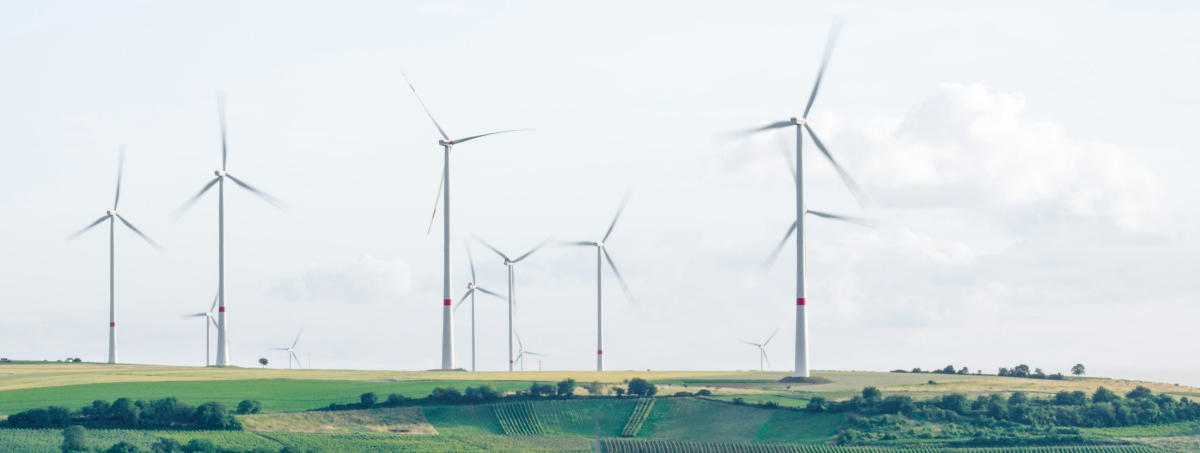
Europe’s wind energy sector is delivering at a scale that demands attention from every business energy leader. WindEurope’s Autumn 2026 report reveals that Europe installed 8.8 gigawatts of new wind capacity in H1 2026, up 30% on H1 2025. Those turbines can supply approximately 7 million European households and replace fossil fuel imports equivalent to 25 LNG tankers annually. With 24 gigawatts expected by year-end, 2026 is on course to be a record.
For business energy leaders, this is a compelling signal. European wind energy momentum, backed by €9 billion in H1 2026 financing, is creating a supply chain ecosystem that Ireland’s growing wind sector is directly connected to. Three dimensions define the commercial opportunity: capacity deployment; the investable auction pipeline; and the contrast between countries with efficient permitting and those, including Ireland, where volumes are declining.
The wind energy data is striking. Germany led with 3.4 gigawatts, roughly 40% of Europe’s H1 total, while Denmark, Poland, Portugal, and France also recorded significant increases. Ukraine installed more than 400 megawatts despite the ongoing war. WindEurope expects Europe to reach 436 gigawatts by 2030, with the EU’s 342 gigawatts meeting 27% of electricity demand, validating the renewable energy investment case.
The permitting picture defines Ireland’s challenge. WindEurope CEO Tinne Van der Straeten has noted that momentum cannot be taken for granted. Permitting volumes are declining in Spain, France, the UK, Italy, and Ireland, even as Germany demonstrates what clean energy permitting reform can deliver. Ireland reached 8GW of connected renewable electricity in March 2026, but the Climate Action Plan requires 9GW of onshore wind by 2030, making planning the critical bottleneck.
The scale of European ambition provides a direct tailwind for Irish investment. Europe auctioned 17.2 gigawatts in H1 2026 and expects to tender 26 gigawatts more in H2, the largest single-year auction volume on record. The ramp-up towards 30 gigawatts annually in the 2030s means the decarbonisation of European electricity is advancing with genuine momentum, with Ireland’s €18.9 billion grid investment providing the platform.
Three priorities stand out for C-suite leaders. First, align procurement with Ireland’s renewable build-out by engaging with offshore wind developers targeting ORESS-2 and subsequent auction rounds. Second, treat European supply chain expansion as a sourcing opportunity, since the 30% installation surge is driving manufacturing and maintenance demand continent-wide. Third, engage proactively with the planning system, since permitting is identified by WindEurope as Ireland’s critical constraint.
European wind is building at record pace. The 8.8 gigawatts installed in H1 2026 reflects both growing ambition and delivery capacity. Irish business energy leaders who invest in clean energy supply, planning readiness, and supply chain positioning will be at the forefront of the most consequential energy transformation of this decade.




.png)

